
Implementation for the most recent years
-
Implementation of 2025 Corporate Governance
-
Implementation of 2024 Corporate Governance
-
Implementation of 2023Corporate Governance
-
Implementation of 2025 Business Integrity Management
Implementation of business integrity management, and deviations from the Ethical Corporate Management Best Practice Principles for TWSE/TPEx Listed Companies and reasons thereof
Assessment item Execution status Deviations from the Ethical Corporate Management Best Practice Principles for TWSE/TPEx Listed Companies and reasons thereof / Summary 1. Establishment of integrity policies and solutions 1) Has the Company established integrity policies approved by the Board of Directors and disclosed, in a memorandum or external correspondence, the policies and practices it has in place to maintain business integrity? Are its Board of Directors and senior management actively implementing these policies and practices? 1) The Company has established Ethical Corporate Management Best Practice Principles, Procedures for Ethical Management and Guidelines for Conduct, and Anti-Bribery Policy, which were approved by the Board and are disclosed on its website and in external correspondence. The Board of Directors, executives, and all employees are strictly required to comply with these regulations. Directors and executives are required to issue statements of ethical management compliance, and the implementation of ethical management operation shall be reported to the Board every six months, including of examinations of whether directors and high-level executives have issued the aforementioned statements, the implementation of related training, and ethical management operation compliance. No deviation 2) Has the Company established an evaluation mechanism to periodically analyze and evaluate business activities that have a relatively higher risk of unethical conduct and thus taken steps to prevent the unethical occurrences listed in paragraph 2 of Article 7 of the Ethical Corporate Management Best Practice Principles for TWSE/ TPEx Listed Companies? 2) To enhance the prevention of unethical conduct, the Company has established a mechanism to regularly evaluate unethical conduct risk. It has defined inherent risk and control factors, including risk management procedures for risk control, reporting, monitoring, and improvement, in order to facilitate the Board’s understanding of unethical conduct risk within the Company’s operational scope and the effectiveness of relevant control measures. Additionally, to avoid unethical conduct during daily business operations, we have in place relevant regulations such as an anti-bribery policy, donation and sponsorship policy, Code of Conduct, and intellectual property management plan, targeting conduct stipulated in paragraph 2, Article 7 of the Ethical Corporate Management Best Practice Principles for TWSE/GTSM Listed Companies. In addition, our Procedures for Ethical Management and Guidelines for Conduct prohibit offering or receiving unjust benefits, facilitation payments, violating trade secrets or intellectual property, unfair competition, and insider trading. Procedures for handling political donations, charity donations, or sponsorships; receiving unjust benefits; and matters relating to facilitation payments as well as measures preventing damage to stakeholders arising from products or services are also in place. The Code of Conduct requires employees to follow the Company’s personnel and business operating rules and regulations as well as financial industry laws and regulations. We require that all employees provide a Code of Conduct Statement committing to follow all relevant rules, perform their obligations, and fulfill their responsibilities. A rolling approach is taken to adjusting the abovementioned prevention measures and regulations, with changes made as necessary depending on legal and practical requirements in order to ensure compliance with and enforcement of ethical management. No deviation 3) Has the Company established and implemented measures against dishonest conduct, and does it periodically review and amend them? Are these measures supported by proper procedures, behavioral guidelines, disciplinary actions, and compliance systems? 3) The Company forbids dishonest conduct, the scope of which is defined in the Code of Conduct (for employees), Code of Ethical Conduct (for directors, managers, and other personnel authorized to manage and sign for the Company), Ethical Corporate Management Best Practice Principles, Procedures for Ethical Management and Guidelines for Conduct, Anti-Bribery Policy, Procedures for Handling Whistleblowing Cases, and Insider Trading Prevention Policy. Integrity policies are implemented through education and training and relevant internal control measures. Relevant policies and regulations are examined regularly and amended as necessary. No deviation 2. Implementation of ethical corporate management 1) Does the Company evaluate the integrity of all counterparties with which it has business relationships? Are integrity clauses included in the agreements it signs with business partners? 1) The Company avoids transacting with any party that has a record of dishonest business conduct. When dealing with a transaction party, the Company adopts a know-your- customer (KYC) approach and checks their names with the sanctions list under the Counter-Terrorism Financing Act. In addition, the Company has in place the Regulations Governing Contract Management, which require transaction agreements to be reviewed by the legal unit in advance to ensure the rights and obligations of the Company and the legality of the transaction. It is recommended that the contracts signed with agents, suppliers, customers, and other business-transaction parties include clauses mandating compliance with the ethical management policy of the Company and effectuating termination by either party at any time without condition if the counterparty is involved in dishonest conduct. No deviation 2) Does the Company have a unit under its Board of Directors handling business integrity- related matters? Does this unit report its integrity policies and unethical conduct prevention programs, as well as their implementation, to the Board of Directors on a regular basis (at least once a year)? 2) The Company established the Ethics and Integrity Committee under the Board of Directors as a designated unit charged with implementing business integrity policies and prevention methods and supervising the enforcement of business integrity in the Company. In addition, the committee tasks the Corporate Governance Department with enforcing business integrity initiatives. The implementation status is reported to the Board of Directors by the designated unit periodically, according to Article 5, paragraph 1 of the Company’s Ethical Corporate Management Best Practice Principles. To strengthen the functioning of the Board and implement business integrity in the Company’s culture and management, the Company utilizes a rolling approach to review and adjust its business integrity policies and to advance prevention actions so as to ensure transparency, integrity, and compliance with laws and regulations. The key implementation highlights of 2025 were as follows:
1. Policy promotion:
The Company conducts awareness raising for all employees regarding the importance of business integrity and compliance with relevant regulations every six months (April 14, 2025, and Oct. 17, 2025).
2. Training and education:
The Company conducts business integrity training annually. The results of the sessions in 2025 were submitted to the Board of Directors for review on Jan. 28, 2026.
3. Unethical conduct risk assessments:
The Company conducts unethical conduct risk assessments annually. The results for 2025 were submitted to the Board of Directors for review on June 27, 2025.
4. Commitments and statements:
The members of the Company’s ninth-term Board of Directors (three directors and four independent directors) and one newly appointed senior executive have all signed the Ethical Management Compliance Statement, pledging to strictly adhere to business integrity standards during their tenure. The signing completion rate was 100%.
5. Implementation status:
The Company compiles the business integrity implementation results of the Company and its subsidiaries semi-annually and submits them to the Board of Directors for review. The implementation status reports for the first and second halves of 2025 were submitted to the Board on July 25, 2025, and Jan. 28, 2026, respectively.No deviation 3) Does the Company have any policy preventing conflicts of interest and channels facilitating the reporting of such conflicts? 3) The Company has policies and regulations preventing conflicts of interest in the Rules of Procedure for the Board of Directors (for directors), Code of Conduct (for employees), and Procedures for Ethical Management and Guidelines for Conduct. These policies and regulations have been effectively implemented. Article 16 of the Rules of Procedure for the Board of Directors specifies the policy for director recusal over conflicts of interest. If any director or juristic person represented by a director is an interested party regarding any agenda item, and when such a relationship is likely to prejudice the interests of the Company or when the director deems it necessary or the Board resolves for the director to recuse himself or herself, the director shall explain the important content of the conflicts and may not participate in discussion or voting. Furthermore, the director shall recuse himself or herself during discussion and voting on that item and may not act as another director’s proxy to exercise voting rights on that matter. Per the Code of Conduct, the Company requires its employees to be aware of supplemental employment that may influence their job performance or any situation that may constitute a conflict of interest, avoid any personal action or pecuniary advantage that may conflict with the Company’s interests, and prevent any abuse of power for personal gain or the inappropriate benefit of others. No deviation 4) Has the Company implemented effective accounting and internal control systems for maintaining business integrity? Are relevant audit plans made by the internal auditors based on unethical conduct assessments to examine compliance with unethical conduct prevention or are these audits performed by the Company’s CPAs? 4) The Company’s accounting system is based on generally accepted accounting principles and its internal control system is developed in accordance with the Implementation Rules of Internal Audit and Internal Control System of Financial Holding Companies and Banking Industries. The annual audit plan integrates integrity and ethics values into the control environment through internal audits and self-inspection systems. Each unit of the Company ensures that all systems and schemes aimed at preventing dishonesty are implemented. The accountants of the Company also periodically examine the implementation of its internal control. No deviation 5) Does the Company organize internal or external training on a regular basis to maintain business integrity? 5) The Company tasks its Corporate Governance Department with producing educational materials on ethical management and regularly providing training to directors, managers, and employees (excluding dispatched workers) of the Company through printed materials, online courses, and email. The total training provided in 2025 was one hour per person. The courses covered topics such as the Company’s business integrity policies as well as anti-bribery and insider-trading prevention. Newly elected directors are required to submit a statement of compliance with ethical management practices upon taking office and training in ethical management is included in the orientation provided for newly recruited employees. In 2025, all 25,680 eligible people (excluding personnel on unpaid leave, etc.) participated in the educational training provided to directors, supervisors, managers, and employees (excluding dispatched workers) of the Company and its subsidiaries, representing 100% participation. No deviation 3. Operation of the Company’s whistleblowing system 1) Does the Company provide incentives and means for employees to report malpractice? Does the Company assign dedicated personnel to investigate malpractice reports? 1) The Company has in place Procedures for Handling Whistleblowing Cases. Whistleblowers may file a report with the Company upon discovering any case of crime, fraud, violation of a law or regulation, or violation of the Ethical Corporate Management Best Practice Principles or Code of Ethical Conduct by any member of the Company or a subsidiary. The Company’s reporting channels include post, email (including the designated complaint mailbox and chairman’s mailbox), and phone. Whistleblowers must provide sufficient information for the Company to properly follow up on the matter, in which case the Company will assign a designated unit to handle the report. The Company has a complete set of guidelines in place for accepting, investigating, and handling such matters. No deviation 2) Has the Company implemented any standard procedures or confidentiality measures for handling malpractice reports? 2) To guide the handling of reports of dishonest employee conduct, the Company has incorporated standardized procedures, including handling process, investigation principles, and confidentiality measures, into the Procedures for Handling Whistleblowing Cases and Procedures for Ethical Management and Guidelines for Conduct. The procedures stipulate public reporting channels, a designated unit to investigate reports, the confidentiality of the identity of the whistleblower and the content of the case, and the opportunity for those accused of wrongdoing to defend themselves during the investigation. If an employee is confirmed to have violated business integrity principles, they will be penalized in accordance with relevant regulations and the integrity business procedures or management system will be examined. The Company shall take the initiative to inform or file a report or complaint with relevant authorities if an investigation discovers any material contingency or legal violation. No deviation 3) Does the Company provide proper whistleblower protection? 3) Personnel who accept, investigate, or otherwise participate in the handling of reports shall ensure the confidentiality of whistleblowers’ identities and the content of their reports. For any violation of the abovementioned confidentiality obligation, the Complaint Investigation and Review Committee may terminate the violator’s participation in the case and, depending on the situation, refer the violator to the human resources unit to face penalties and relevant liabilities. The Company may not unfairly or unfavorably treat whistleblowers or anyone who assists them in whistleblowing, as stipulated by the relevant regulations. Such treatment excludes actions that are not aimed at the whistleblower but rather are the result of an organizational restructuring, merger, dissolution, or transfer of personnel due to business needs or situations where the whistleblower is penalized after being found by the Company to have violated the law or engaged in other misconduct. If a whistleblower’s report is verified and results in a significant contribution and economic benefit to the Company, the whistleblower may be commended or rewarded in accordance with relevant Company regulations. No deviation 4. Enhancement of information disclosure Does the Company disclose its integrity principles and related progress on its website and the Market Observation Post System? The Company has both Chinese and English versions of its website to disclose integrity management-related regulations and information. The site’s content is updated as necessary by various units depending on the nature of the information. The Company also uploads its Ethical Corporate Management Best Practice Principles and Code of Ethical Conduct to the Market Observation Post System. No deviation 5. If the Company has established Ethical Corporate Management Best Practice Principles in accordance with the Ethical Corporate Management Best Practice Principles for TWSE/TPEx Listed Companies, describe any discrepancy between the principles and their implementation:
The Company used the Ethical Corporate Management Best Practice Principles for TWSE/TPEx Listed Companies as the model for its Ethical Corporate Management Best Practice Principles. The Company modifies the content of the principles as necessary to align them with legal and practical requirements, and it provides regular reports on the status of ethical management in the Company and the results of unethical conduct risk evaluations to the Ethics and Integrity Committee and the Board of Directors. All Company operations are in accordance with the Company’s Ethical Corporate Management Best Practice Principles.6. Other important information that facilitates a better understanding of the Company’s implementation of ethical corporate management (e.g., details about the evaluation and amendment of its ethical management rules): - In accordance with the Procedures for Ethical Management and Guidelines for Conduct, before engaging in a business transaction, the Company investigates any potential agent, supplier, customer, or other business-transaction partner to determine its legality, ethical management policies, and whether it was involved in dishonest conduct, thus ensuring that it operates in an ethical and transparent way and will not ask for, offer, or accept bribes. During the abovementioned investigation, proper examination measures may be taken to examine such transaction partner’s own business partners to understand the condition of its ethical management.
- The Company regularly schedules corporate governance training for all directors. In 2025, we arranged the courses “Personal Data Protection and Financial Business Development in the AI Era,” “What AI Can and Cannot Do: Corporate Survival Principles in the AI Wave,” “Digital Asset Development Trends and Information Security Risks,” and “Information Security Governance in Global Volatility: Information Security Defense in the Geopolitical Era” to help directors better understand trends in AI, fintech, and cybersecurity governance, in turn enhancing their supervision and governance abilities. Additionally, the Company arranged the course “AML Compliance and Anti-Fraud Protection” for the directors to improve their oversight of ethical operations. Annual ethical management training was also conducted for all directors and employees (excluding dispatched personnel).
-
Implementation of 2024 Business Integrity Management
Implementation of business integrity management, and deviations from the Ethical Corporate Management Best Practice Principles for TWSE/TPEx Listed Companies and reasons thereof
Assessment item Execution status Deviations from the Ethical Corporate Management Best Practice Principles for TWSE/TPEx Listed Companies and reasons thereof / Summary 1. Establishment of integrity policies and solutions 1) Has the Company established integrity policies approved by the Board of Directors and disclosed, in a memorandum or external correspondence, the policies and practices it has in place to maintain business integrity? Are its Board of Directors and senior management actively implementing these policies and practices? 1) The Company has established Ethical Corporate Management Best Practice Principles, Procedures for Ethical Management and Guidelines for Conduct, and Anti-Bribery Policy, which were approved by the Board and are disclosed on its website and in external correspondence. The Board of Directors, executives, and all employees are strictly required to comply with these regulations. Directors and executives are required to issue statements of ethical management compliance, and the implementation of ethical management operation shall be reported to the Board every six months, including of examinations of whether directors and high-level executives have issued the aforementioned statements, the implementation of related training, and ethical management operation compliance. No deviation 2) Has the Company established an evaluation mechanism to periodically analyze and evaluate business activities that have a relatively higher risk of unethical conduct and thus taken steps to prevent the unethical occurrences listed in paragraph 2 of Article 7 of the Ethical Corporate Management Best Practice Principles for TWSE/ TPEx Listed Companies? 2) To enhance the prevention of unethical conduct, the Company has established a mechanism to regularly evaluate unethical conduct risk. It has defined inherent risk and control factors, including risk management procedures for risk control, reporting, monitoring, and improvement, in order to facilitate the Board’s understanding of unethical conduct risk within the Company’s operational scope and the effectiveness of relevant control measures. Additionally, to avoid unethical conduct during daily business operations, we have in place relevant regulations such as an anti-bribery policy, donation and sponsorship policy, Code of Conduct, and intellectual property management plan, targeting conduct stipulated in paragraph 2, Article 7 of the Ethical Corporate Management Best Practice Principles for TWSE/GTSM Listed Companies. In addition, our Procedures for Ethical Management and Guidelines for Conduct prohibit offering or receiving unjust benefits, facilitation payments, violating trade secrets or intellectual property, unfair competition, and insider trading. Procedures for handling political donations, charity donations, or sponsorships; receiving unjust benefits; and matters relating to facilitation payments as well as measures preventing damage to stakeholders arising from products or services are also in place. The Code of Conduct requires employees to follow the Company’s personnel and business operating rules and regulations as well as financial industry laws and regulations. We require that all employees provide a Code of Conduct Statement committing to follow all relevant rules, perform their obligations, and fulfill their responsibilities. A rolling approach is taken to adjusting the abovementioned prevention measures and regulations, with changes made as necessary depending on legal and practical requirements in order to ensure compliance with and enforcement of ethical management. No deviation 3) Has the Company established and implemented measures against dishonest conduct, and does it periodically review and amend them? Are these measures supported by proper procedures, behavioral guidelines, disciplinary actions, and compliance systems? 3) The Company forbids dishonest conduct, the scope of which is defined in the Code of Conduct (for employees), Code of Ethical Conduct (for directors, managers, and other personnel authorized to manage and sign for the Company), Ethical Corporate Management Best Practice Principles, Procedures for Ethical Management and Guidelines for Conduct, Anti-Bribery Policy, Procedures for Handling Whistleblowing Cases, and Management Policy for Preventing Insider Trading. Integrity policies are implemented through education and training and relevant internal control measures. Relevant policies and regulations are examined regularly and amended as necessary. No deviation 2. Implementation of ethical corporate management 1) Does the Company evaluate the integrity of all counterparties with which it has business relationships? Are integrity clauses included in the agreements it signs with business partners? 1) The Company avoids transacting with any party that has a record of dishonest business conduct. When dealing with a transaction party, the Company adopts a know-your- customer (KYC) approach and checks their names with the sanctions list under the Counter-Terrorism Financing Act. In addition, the Company has in place the Regulations Governing Contract Management, which require transaction agreements to be reviewed by the legal unit in advance to ensure the rights and obligations of the Company and the legality of the transaction. It is recommended that the contracts signed with agents, suppliers, customers, and other business-transaction parties include clauses mandating compliance with the ethical management policy of the Company and effectuating termination by either party at any time without condition if the counterparty is involved in dishonest conduct. No deviation 2) Does the Company have a unit under its Board of Directors handling business integrity- related matters? Does this unit report its integrity policies and unethical conduct prevention programs, as well as their implementation, to the Board of Directors on a regular basis (at least once a year)? 2) The Company established the Ethics and Integrity Committee under the Board of Directors as a designated unit charged with implementing business integrity policies and prevention methods and supervising the enforcement of business integrity in the Company. The committee sets an annual plan at the beginning of every year. In addition, the Company tasks the Corporate Governance Department with enforcing business integrity and the education and training thereof. The implementation status of ethical management is reported to the Ethics and Integrity Committee and the Board of Directors every six months. To strengthen the function of the Board and implement business integrity in the Company’s culture and management, the Company utilizes a rolling approach to review and adjust its ethical management policies and to advance prevention actions so as to ensure transparency, integrity, and compliance with laws and regulations. No deviation 3) Does the Company have any policy preventing conflicts of interest and channels facilitating the reporting of such conflicts? 3) The Company has policies and regulations preventing conflicts of interest in the Rules of Procedure for the Board of Directors (for directors), Code of Conduct (for employees), and Procedures for Ethical Management and Guidelines for Conduct. These policies and regulations have been effectively implemented. Article 16 of the Rules of Procedure for the Board of Directors specifies the policy for director recusal over conflicts of interest. If any director or juristic person represented by a director is an interested party regarding any agenda item, and when such a relationship is likely to prejudice the interests of the Company or when the director deems it necessary or the Board resolves for the director to recuse himself or herself, the director shall explain the important content of the conflicts and may not participate in discussion or voting. Furthermore, the director shall recuse himself or herself during discussion and voting on that item and may not act as another director’s proxy to exercise voting rights on that matter. Per the Code of Conduct, the Company requires its employees to be aware of supplemental employment that may influence their job performance or any situation that may constitute a conflict of interest, avoid any personal action or pecuniary advantage that may conflict with the Company’s interests, and prevent any abuse of power for personal gain or the inappropriate benefit of others. No deviation 4) Has the Company implemented effective accounting and internal control systems for maintaining business integrity? Are relevant audit plans made by the internal auditors based on unethical conduct assessments to examine compliance with unethical conduct prevention or are these audits performed by the Company’s CPAs? 4) The Company’s accounting system is based on generally accepted accounting principles and its internal control system is developed in accordance with the Implementation Rules of Internal Audit and Internal Control System of Financial Holding Companies and Banking Industries. The annual audit plan integrates integrity and ethics values into the control environment through internal audits and self-inspection systems. Each unit of the Company ensures that all systems and schemes aimed at preventing dishonesty are implemented. The accountants of the Company also periodically examine the implementation of its internal control. No deviation 5) Does the Company organize internal or external training on a regular basis to maintain business integrity? 5) The Company tasks its Corporate Governance Department with producing educational materials on ethical management and regularly providing training to directors, managers, and employees (excluding dispatched workers) of the Company through printed materials, online courses, and email. The courses cover the Company’s ethical management policies, anti-bribery, and insider trading prevention. Newly elected directors are required to submit a statement of compliance with ethical management practices upon taking office and training in ethical management is included in the orientation provided for newly recruited employees. In 2024, all 25,019 eligible people (excluding personnel on unpaid leave, etc.) participated in the educational training provided to directors, supervisors, managers, and employees (excluding dispatched workers) of the Company and its subsidiaries, representing 100% participation. No deviation 3. Operation of the Company’s whistleblowing system 1) Does the Company provide incentives and means for employees to report malpractice? Does the Company assign dedicated personnel to investigate malpractice reports? 1) The Company has in place Procedures for Handling Whistleblowing Cases. Whistleblowers may file a report with the Company upon discovering any case of crime, fraud, violation of a law or regulation, or violation of the Ethical Corporate Management Best Practice Principles or Code of Ethical Conduct by any member of the Company or a subsidiary. The Company’s reporting channels include post, email (including the designated complaint mailbox and chairman’s mailbox), and phone. Whistleblowers must provide sufficient information for the Company to properly follow up on the matter, in which case the Company will assign a designated unit to handle the report. The Company has a complete set of guidelines in place for accepting, investigating, and handling such matters. No deviation 2) Has the Company implemented any standard procedures or confidentiality measures for handling malpractice reports? 2) The Company incorporates standard procedures, including confidentiality measures, into the Procedures for Handling Whistleblowing Cases and Procedures for Ethical Management and Guidelines for Conduct to guide the handling of reports of dishonest employee conduct. The procedures include public reporting channels, a designated unit to investigate such reports, the maintaining of the confidentiality of the handling process and relevant information, the opportunity for those accused of wrongdoing to defend themselves during the investigation, and protection of the whistleblowers and investigators. If an employee is confirmed to have violated the principles of ethical management, they will be penalized in accordance with relevant regulations and the integrity business procedures or management system will be examined. The Company shall take the initiative to inform or file a report or complaint with relevant authorities if an investigation discovers any material contingency or legal violation. No deviation 3) Does the Company provide proper whistleblower protection? 3) Personnel who accept, investigate, or otherwise participate in the handling of reports shall ensure the confidentiality of whistleblowers’ identities and the content of their reports. For any violation of the abovementioned confidentiality obligation, the Complaint Investigation and Review Committee may terminate the violator’s participation in the case and, depending on the situation, refer the violator to the human resources unit to face penalties and relevant liabilities. The Company may not unfairly or unfavorably treat whistleblowers or anyone who assists them in whistleblowing, as stipulated by the relevant regulations. Such treatment excludes actions that are not aimed at the whistleblower but rather are the result of an organizational restructuring, merger, dissolution, or transfer of personnel due to business needs or situations where the whistleblower is penalized after being found by the Company to have violated the law or engaged in other misconduct. If a whistleblower’s report is verified and results in a significant contribution and economic benefit to the Company, the whistleblower may be commended or rewarded in accordance with relevant Company regulations. No deviation 4. Enhancement of information disclosure Does the Company disclose its integrity principles and related progress on its website and the Market Observation Post System? The Company has both Chinese and English versions of its website to disclose integrity management-related regulations and information. The site’s content is updated as necessary by various units depending on the nature of the information. The Company also discloses its Ethical Corporate Management Best Practice Principles and Code of Ethical Conduct on the Market Observation Post System and announces related information in accordance with the Taiwan Stock Exchange Corporation Procedures for Verification and Disclosure of Material Information of Companies with Listed Securities. No deviation 5. If the Company has established Ethical Corporate Management Best Practice Principles in accordance with the Ethical Corporate Management Best Practice Principles for TWSE/TPEx Listed Companies, describe any discrepancy between the principles and their implementation:
The Company used the Ethical Corporate Management Best Practice Principles for TWSE/TPEx Listed Companies as the model for its Ethical Corporate Management Best Practice Principles. The Company modifies the content of the principles as necessary to align them with legal and practical requirements, and it provides regular reports on the status of ethical management in the Company and the results of unethical conduct risk evaluations to the Ethics and Integrity Committee and the Board of Directors. All Company operations are in accordance with the Company’s Ethical Corporate Management Best Practice Principles.6. Other important information that facilitates a better understanding of the Company’s implementation of ethical corporate management (e.g., details about the evaluation and amendment of its ethical management rules): - The Company will conduct an awareness campaign to all employees every six months, reiterating the importance of implementing ethical management practices.
- In accordance with the Procedures for Ethical Management and Guidelines for Conduct, before engaging in a business transaction, the Company investigates any potential agent, supplier, customer, or other business-transaction partner to determine its legality, ethical management policies, and whether it was involved in dishonest conduct, thus ensuring that it operates in an ethical and transparent way and will not ask for, offer, or accept bribes. During the abovementioned investigation, proper examination measures may be taken to examine such transaction partner’s own business partners to understand the condition of its ethical management.
- The Company regularly schedules corporate governance training for all directors. In 2024, we arranged the courses “Cybersecurity Governance Strategies for Resilient Supply Chains: Ensuring Secure Collaboration with Third-party Partners,” “AI Security Challenges and Future Trends in the Era of Digital Technology Risks,” “Pioneering the Future of AI: Case Studies on Generative AI Applications,” and “Cybersecurity Governance Strategies for TWSE/ TPEx-listed Companies from the Perspective of ESG Corporate Sustainability Development” to help directors better understand trends in AI, fintech, and cybersecurity governance, in turn enhancing their supervision and governance abilities. Additionally, the Company arranged the course “AML Compliance and Anti-Fraud Protection” for the directors to improve their oversight of ethical operations. Annual ethical management training was also conducted for all directors and employees (excluding dispatched personnel).
-
Implementation of 2023 Business Integrity Management
Implementation of business integrity management, and deviations from the Ethical Corporate Management Best Practice Principles for TWSE/TPEx Listed Companies and reasons thereof
Assessment item Execution status Deviations from the Ethical Corporate Management Best Practice Principles for TWSE/TPEx Listed Companies and reasons thereof / Summary 1. Establishment of integrity policies and solutions 1) Has the Company established integrity policies approved by the Board of Directors and disclosed, in a memorandum or external correspondence, the policies and practices it has in place to maintain business integrity? Are its Board of Directors and senior management actively implementing these policies and practices? 1) The Company has established Ethical Corporate Management Best Practice Principles, Procedures for Ethical Management and Guidelines for Conduct, and Anti-Bribery Policy, which were approved by the Board and are disclosed on its website and in external correspondence. The Board of Directors, executives, and all employees are strictly required to comply with these regulations. Directors and executives are required to issue statements of ethical management compliance, and the implementation of ethical management operation shall be reported to the Board every six months, including of examinations of whether directors and high-level executives have issued the aforementioned statements, the implementation of related training, and ethical management operation compliance. No deviation 2) Has the Company established an evaluation mechanism to periodically analyze and evaluate business activities that have a relatively higher risk of unethical conduct and thus taken steps to prevent the unethical occurrences listed in paragraph 2 of Article 7 of the Ethical Corporate Management Best Practice Principles for TWSE/ TPEx Listed Companies? 2) To enhance the prevention of unethical conduct, the Company has established a mechanism to regularly evaluate unethical conduct risk. It has defined inherent risk and control factors, including risk management procedures for risk control, reporting, monitoring, and improvement, in order to facilitate the Board’s understanding of unethical conduct risk within the Company’s operational scope and the effectiveness of relevant control measures. Additionally, to avoid unethical conduct during daily business operations, we have in place relevant regulations such as an anti-bribery policy, donation and sponsorship policy, Code of Conduct, and intellectual property management plan, targeting conduct stipulated in paragraph 2, Article 7 of the Ethical Corporate Management Best Practice Principles for TWSE/GTSM Listed Companies. In addition, our Procedures for Ethical Management and Guidelines for Conduct prohibit offering or receiving unjust benefits, facilitation payments, violating trade secrets or intellectual property, unfair competition, and insider trading. Procedures for handling political donations, charity donations, or sponsorships; receiving unjust benefits; and matters relating to facilitation payments as well as measures preventing damage to stakeholders arising from products or services are also in place. The Code of Conduct requires employees to follow the Company’s personnel and business operating rules and regulations as well as financial industry laws and regulations. We require that all employees provide a Code of Conduct Statement committing to follow all relevant rules, perform their obligations, and fulfill their responsibilities. A rolling approach is taken to adjusting the abovementioned prevention measures and regulations, with changes made as necessary depending on legal and practical requirements in order to ensure compliance with and enforcement of ethical management. No deviation 3) Has the Company established and implemented measures against dishonest conduct, and does it periodically review and amend them? Are these measures supported by proper procedures, behavioral guidelines, disciplinary actions, and compliance systems? 3) The Company forbids dishonest conduct, the scope of which is defined in the Code of Conduct (for employees), Code of Ethical Conduct (for directors, managers, and other personnel authorized to manage and sign for the Company), Ethical Corporate Management Best Practice Principles, Procedures for Ethical Management and Guidelines for Conduct, Anti-Bribery Policy, Procedures for Handling Whistleblowing Cases, and Policy for the Prevention of Insider Trading. Integrity policies are implemented through education and training and relevant internal control measures. Relevant policies and regulations are examined regularly and amended as necessary. No deviation 2. Implementation of ethical corporate management 1) Does the Company evaluate the integrity of all counterparties with which it has business relationships? Are integrity clauses included in the agreements it signs with business partners? 1) The Company avoids transacting with any party that has a record of dishonest business conduct. When dealing with a transaction party, the Company adopts a know-your- customer (KYC) approach and checks their names with the sanctions list under the Counter-Terrorism Financing Act. In addition, the Company has a contract management policy, which requires transaction agreements to be reviewed by the legal unit in advance to ensure the rights and obligations of the Company and the legality of the transaction. It is recommended that the contracts signed with agents, suppliers, customers, and other business-transaction parties include clauses mandating compliance with the ethical management policy of the Company and effectuating termination by either party at any time without condition if the counterparty is involved in dishonest conduct. No deviation 2) Does the Company have a unit under its Board of Directors handling business integrity- related matters? Does this unit report its integrity policies and unethical conduct prevention programs, as well as their implementation, to the Board of Directors on a regular basis (at least once a year)? 2) The Company established the Ethics and Integrity Committee under the Board of Directors as a designated unit charged with implementing business integrity policies and prevention methods and supervising the enforcement of business integrity in the Company. The committee sets an annual plan at the beginning of every year. In addition, the Company tasks the Corporate Governance Department with enforcing business integrity and the education and training thereof. The implementation status of ethical management is reported to the Ethics and Integrity Committee and the Board of Directors every six months. To strengthen the function of the Board and implement business integrity in the Company’s culture and management, the Company utilizes a rolling approach to review and adjust its ethical management policies and to advance prevention actions so as to ensure transparency, integrity, and compliance with laws and regulations. No deviation 3) Does the Company have any policy preventing conflicts of interest and channels facilitating the reporting of such conflicts? 3) The Company has policies and regulations preventing conflicts of interest in the Rules of Procedure for the Board of Directors (for directors), Code of Conduct (for employees), and Procedures for Ethical Management and Guidelines for Conduct. These policiesand regulations have been effectively implemented. Article 16 of the Specification of Procedure for the Board of Directors specifies the policy for director recusal over conflicts of interest.
If any director or juristic person represented by a director is an interested party regarding any agenda item, and when such a relationship is likely to prejudice the interests of the Company or when the director deems it necessary or the Board resolves for the director to recuse himself or herself, the director shall explain the important content of the conflicts and may not participate in discussion or voting. Furthermore, the director shall recuse himself or herself during discussion and voting on that item and may not act as another director’s proxy to exercise voting rights on that matter. Per the Code of Conduct, the Company requires its employees to be aware of supplemental employment that may influence their job performance or any situation that may constitute a conflict of interest, avoid any personal action or pecuniary advantage that may conflict with the Company’s interests, and prevent any abuse of power for personal gain or the inappropriate benefit of others.No deviation 4) Has the Company implemented effective accounting and internal control systems for maintaining business integrity? Are relevant audit plans made by the internal auditors based on unethical conduct assessments to examine compliance with unethical conduct prevention or are these audits performed by the Company’s CPAs? 4) The Company’s accounting system is based on generally accepted accounting principles and its internal control system is developed in accordance with the Implementation Rules of Internal Audit and Internal Control System of Financial Holding Companies and Banking Industries. The annual audit plan integrates integrity and ethics values into the control environment through internal audits and self-inspection systems. Each unit of the Company ensures that all systems and schemes aimed at preventing dishonesty are implemented. The accountants of the Company also periodically examine the implementation of its internal control. No deviation 5) Does the Company organize internal or external training on a regular basis to maintain business integrity? 5) The Company tasks its Corporate Governance Department with producing educational materials on ethical management and regularly providing training to directors, supervisors, managers, and employees (excluding dispatched workers) of the Company through printed materials, online courses, and email. The courses cover the Company’s ethical management policies, anti-bribery, and insider trading prevention. Educational materials on ethical management are provided to newly elected directors when they take office and training in ethical management is included in the orientation provided for newly recruited employees. In 2023, all 24,713 eligible people (excluding personnel on unpaid leave) participated in the educational training provided to directors, supervisors, managers, and employees (excluding dispatched workers) of the Company and its subsidiaries, representing 100% participation. No deviation 3. Operation of the Company’s whistleblowing system 1) Does the Company provide incentives and means for employees to report malpractice? Does the Company assign dedicated personnel to investigate malpractice reports? 1) The Company has in place Procedures for Handling Whistleblowing Cases. Whistleblowers may file a report with the Company upon discovering any case of crime, fraud, violation of a law or regulation, or violation of the Ethical Corporate Management Best Practice Principles or Code of Ethical Conduct by any member of the Company or a subsidiary. The Company’s reporting channels include post, email (including the designated complaint mailbox and chairman’s mailbox), and phone. Whistleblowers must provide sufficient information for the Company to properly follow up on the matter, in which case the Company will assign a designated unit to handle the report. The Company has a complete set of guidelines in place for accepting, investigating, and handling such matters. No deviation 2) Has the Company implemented any standard procedures or confidentiality measures for handling malpractice reports? 2) The Company incorporates standard procedures, including confidentiality measures, into the Procedures for Handling Whistleblowing Cases and Procedures for Ethical Management and Guidelines for Conduct to guide the handling of reports of dishonest employee conduct. The procedures include public reporting channels, a designated unit to investigate such reports, the maintaining of the confidentiality of the handling process and relevant information, the opportunity for those accused of wrongdoing to defend themselves during the investigation, and protection of the whistleblowers and investigators. If an employee is confirmed to have violated the principles of ethical management, they will be penalized in accordance with relevant regulations and the integrity business procedures or management system will be examined. The Company shall take the initiative to inform or file a report or complaint with relevant authorities if an investigation discovers any material contingency or legal violation. No deviation 3) Does the Company provide proper whistleblower protection? 3) Personnel who accept, investigate, or otherwise participate in the handling of reports shall ensure the confidentiality of whistleblowers’ identities and the content of their reports. For any violation of the abovementioned confidentiality obligation, the Complaint Investigation and Review Committee may terminate the violator’s participation in the case and, depending on the situation, refer the violator to the human resources unit to face penalties and relevant liabilities. The Company may not unfairly or unfavorably treat whistleblowers or anyone who assists them in whistleblowing, as stipulated by the relevant regulations. Such treatment excludes actions that are not aimed at the whistleblower but rather are the result of an organizational restructuring, merger, dissolution, or transfer of personnel due to business needs or situations where the whistleblower is penalized after being found by the Company to have violated the law or engaged in other misconduct. If a whistleblower’s report is verified and results in a significant contribution and economic benefit to the Company, the whistleblower may be commended or rewarded in accordance with relevant Company regulations. No deviation 4. Enhancement of information disclosure
Does the Company disclose its integrity principles and related progress on its website and the Market Observation Post System?The Company has both Chinese and English versions of its website to disclose integrity management-related regulations and information. The site’s content is updated as necessary by various units depending on the nature of the information. The Company also discloses its Ethical Corporate Management Best Practice Principles and Code of Ethical Conduct on the Market Observation Post System and announces related information in accordance with the Taiwan Stock Exchange Corporation Procedures for Verification and Disclosure of Material Information of Companies with Listed Securities. No deviation 5. If the Company has established Ethical Corporate Management Best Practice Principles in accordance with the Ethical Corporate Management Best Practice Principles for TWSE/TPEx Listed Companies, describe any discrepancy between the principles and their implementation:
The Company used the Ethical Corporate Management Best Practice Principles for TWSE/TPEx Listed Companies as the model for its Ethical Corporate Management Best Practice Principles. The Company modifies the content of the principles as necessary to align them with legal and practical requirements, and it provides regular reports on the status of ethical management in the Company and the results of unethical conduct risk evaluations to the Ethics and Integrity Committee and the Board of Directors. All Company operations are in accordance with the Company’s Ethical Corporate Management Best Practice Principles.6. Other important information that facilitates a better understanding of the Company’s implementation of ethical corporate management (e.g., details about the evaluation and amendment of its ethical management rules): - The Company will reiterate the relevant ethical corporate management rules to all employees every six months, emphasizing the compliance implementation of ethical corporate management.
- In accordance with the Procedures for Ethical Management and Guidelines for Conduct, before engaging in a business transaction, the Company investigates any potential agent, supplier, customer, or other business-transaction partner to determine its legality, ethical management policies, and whether it was involved in dishonest conduct, thus ensuring that it operates in an ethical and transparent way and will not ask for, offer, or accept bribes. During the abovementioned investigation, proper examination measures may be taken to examine such transaction partner’s own business partners to understand the condition of its ethical management.
- The Company regularly schedules corporate governance training for all directors. In 2023, the course “AI Development Trends, Strategies, and Governance” has been arranged for directors to understand the impact of AI on the financial industry and related regulatory trends, in turn enhancing their supervision and governance abilities. Additionally, the Company arranged three other relevant courses for directors, namely “Exploring AML/CFT Practices,” “Treating Customers Fairly and the Protection of Financial Consumers,” and “Trends and Practices of Fintech and Regtech,” aimed at improving their oversight of ethical operations. Annual ethical management training was also conducted for all directors and employees (excluding dispatched personnel).
In accordance with the Articles of Incorporation, the election of Board directors shall utilize a candidate nomination system. Furthermore, the composition of the Board shall be planned such as to arrange for suitable successors according to Company regulations such as the Rules for Director Elections, Nomination Committee Charter, and Corporate Governance Best Practice Principles.
The Company evaluates candidates in consideration of criteria such as familiarity with the Company’s corporate culture and business controls as well as their own expertise in the management of subsidiaries, in addition to their professional qualifications and experience. The Company recruits professionals in the financial industry or government–industry–academic circles in accordance with its development blueprint. When a candidate is an incumbent Board director or a director at a subsidiary, the Company shall also refer to the results of Board performance evaluations.
In order to maintain the professionalism and experience of Board members, the Company uses the following means to build a database of director talent for reference in director succession planning:
- seeks suitable candidates from various fields to serve as Company directors;
- references independent talent pools;
- appoints current directors or appropriate external agencies and consultants to propose suitable director candidates; and
- references the results of the Board performance evaluations when considering the reappointment of incumbent directors.
The Company has been promoting a function-oriented talent strategy for many years, and has mapped out various professional and management training courses based on the belief that its staff members are its most valuable asset. In recent years, the Company has further integrated world-renowned leadership assessment tools to comprehensively review the leadership potential and qualities of management talent in various businesses, functions, and levels in order to elucidate the factors that motivate individuals to grow. It also maintains talent development committees that examine the performance and potential of personnel at all levels to facilitate the holistic discussion and planning of customized career development paths. The Company can accurately allocate resources to build a complete talent pool by providing employees with on-the-job training, project assignments, or cross-country, cross-business, and cross-functional rotation experience.
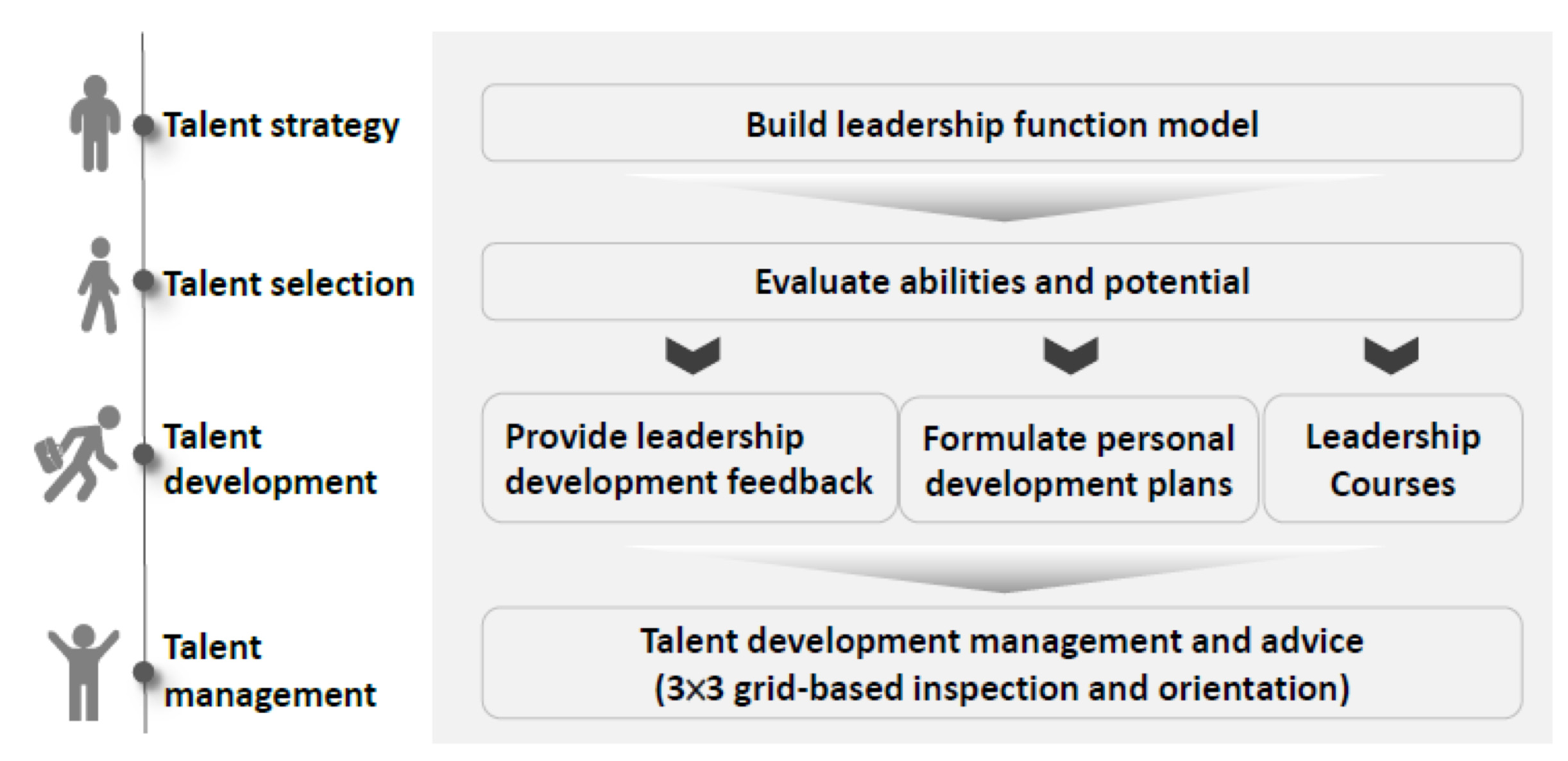
Moreover, the Company has cooperated with numerous leading international academic institutions to introduce top teachers and development resources and to provide global, diverse, and systematic development planning (e.g., courses, job rotations, project assignment, coach feedback, and personal development). These measures are taken in order to enhance the strategic leadership structure, stimulate innovative thinking, and ensure that the Company has a steady stream of talent sufficient to maintain its leading position in the industry in response to the rapidly changing external operating environment.